
Organic Hair Growth Oil: A 10-Minute Scalp Ritual for Thicker Hair and Less Head Tension
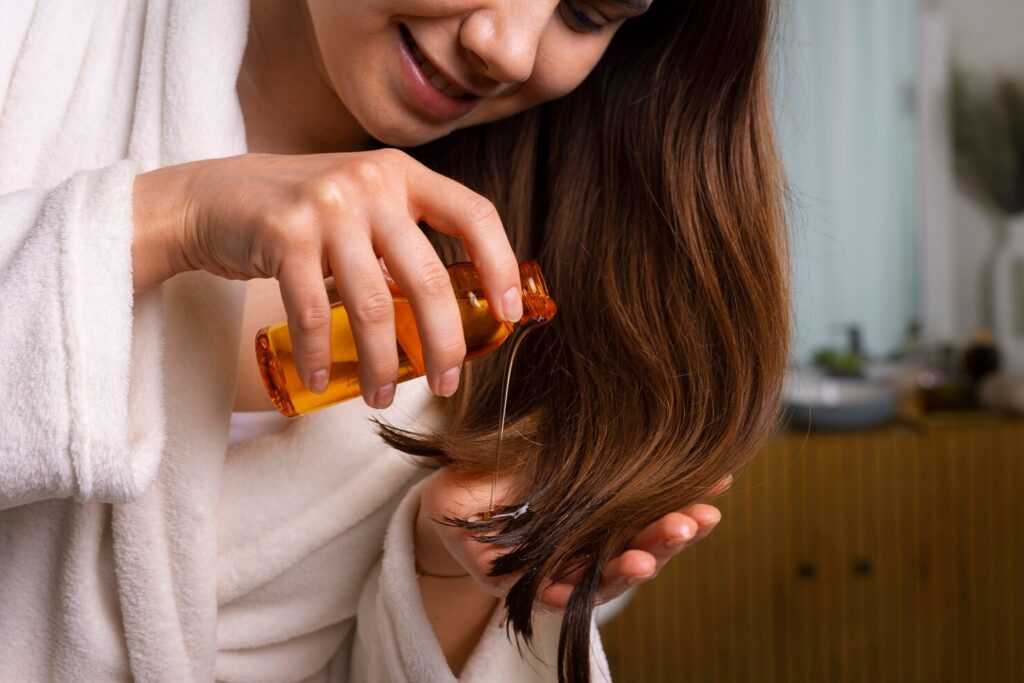
Most people using a hair oil are treating the wrong part of the hair. They warm the oil, run it through the lengths, tie it up and wash it out. The lengths get softer, which feels like progress, but nothing changes at the root – and the root is where growth happens.
An organic hair growth oil only earns its price if it reaches your scalp.
The scalp is the actual target
Hair grows from a follicle sitting a few millimetres under the skin of your scalp. That follicle depends on blood supply. Anything that reduces circulation – tight hairstyles, stress, product buildup, clenched shoulders – starves it. Over time the follicle produces thinner strands, then goes quiet.
Oiling the ends is cosmetic. Oiling the scalp, with your fingers doing the work, is what moves the needle. The oil is partly the point and partly the excuse to massage.
What to look for in the bottle
The carrier base matters – cold-pressed coconut, almond or sesame oil absorbs properly instead of sitting on top.
The active side is where a good botanical hair growth oil earns its keep. Rosemary is the standout, and it has the most research behind it for circulation and follicle stimulation – one often-cited trial found it performed comparably to a 2% minoxidil solution over six months, without the scalp itching. If the label lists “fragrance” instead of the actual oils, put it back.
The ten-minute method
Part your hair into four or five sections. Put a few drops directly on the scalp along each parting – not on the lengths.
Now use the pads of your fingers, never your nails. Small circles, firm enough to move the skin over the skull rather than sliding across it. Work front to back, then the sides, then the base of the skull where your neck meets your head. That last spot is usually the tightest and the most neglected.
Ten minutes. Twice a week. Leave it in for an hour, or overnight on an old pillowcase, then wash with a mild shampoo.
If your lengths are dry or damaged from heat and colour, that is a separate problem – a keratin hair oil handles the mid-lengths and ends while the rosemary oil works on the roots. Do not ask one bottle to do both jobs.
This works through repetition, not intensity. Give it three months.
The part nobody connects: your head hurts for the same reason
Most people notice something halfway through a scalp massage – the tension at their temples eases. Not a coincidence. The same tight muscles across the scalp, temples and neck that restrict blood flow to your follicles are behind most tension headaches.
This is where a migraine relief essential oil roller fits into the same ten minutes. A peppermint and lavender blend is the standard build: menthol produces a cooling sensation that helps interrupt pain signals and relax the muscle underneath, while lavender takes the edge off the stress that triggered it. Eucalyptus and grapefruit round it out.
Roll it across your temples, along the hairline, behind the ears and down the back of the neck, then press with your fingertips for thirty seconds at each point. A natural migraine relief oil will not replace medication for severe migraine, but for the dull stress-built headache most of us get by 4pm, it does the job without a tablet.
Why a set beats a single bottle
An essential oil roller set covers the three moments that actually recur: a migraine blend for tension headaches, a cramp comfort blend with clary sage and ginger for period days, and a sleep blend with lavender and chamomile for winding down.
Buying pre-diluted matters more than people realise. Undiluted essential oil on skin causes irritation and sensitisation over time, and ready-made aromatherapy roller blends solve that for you. They live in a bag or a desk drawer and take five seconds to use.
Putting it together
Twice a week, ten minutes of oil massaged properly into your scalp. Keep a roller on your desk for the days your head is tight. Same muscles, same circulation, two different problems.
Working on pigmentation as well? Our guide to using a face dark spot remover soap covers the skin side of the same routine.
Photograph your part line today so you have something honest to compare against in three months.
FAQs
How often should I oil my scalp?
Twice a week. More often means more shampooing, which defeats the purpose.
Can I leave hair oil overnight?
Yes, but once a week overnight is plenty.
Are roller blends safe to use daily?
Pre-diluted blends are. Avoid the area right around the eyes.